

Applying artificial intelligence without a clear purpose is a risk: it should be planned
AI consulting: assessment and roadmap
We analyze your processes and your infrastructure, and deliver a prioritized roadmap: what is worth automating, in what order, and what results to expect.
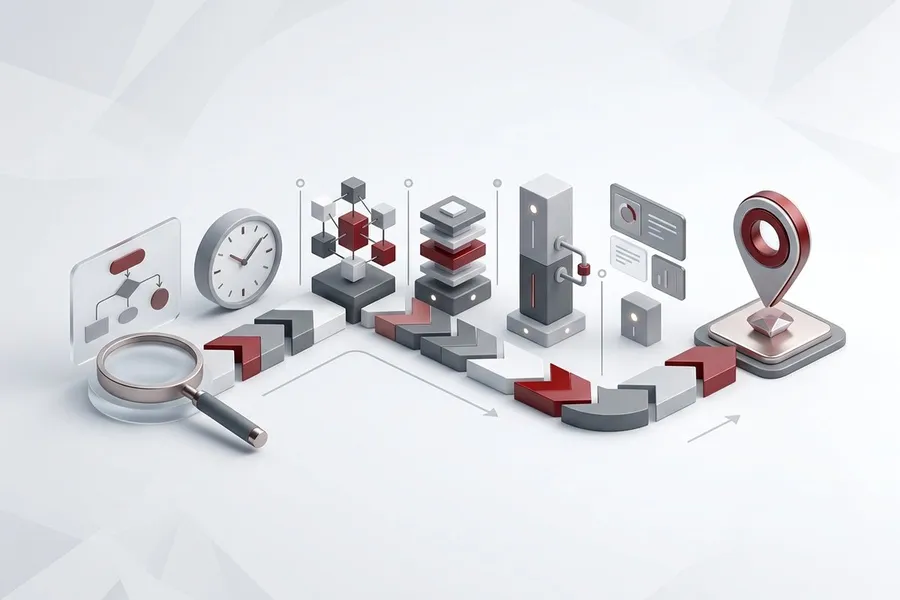
The starting point has to be a roadmap
First comes an analysis of how the work is really done, where the time goes, and which processes are worth improving. That analysis is used to draw up a roadmap, ordered by what each action contributes and by what it costs to put in place.
Common mistakes when implementing AI in a company
Without a prior plan, AI implementation usually ends in one of these three ways.
Isolated tools that nobody uses
They are tried out for a few days and subscribed to as SaaS, and before long it turns out that they are not being used, because they were contracted without a clear implementation strategy.
A project tackled with internal resources that never quite gets finished
Months of trial and error with no working result and, by the time one arrives, the requirements have already changed.
Very high expectations, without a clear plan
Instead of approaching the project in phases, the whole thing is tackled at once, without an MVP (minimum viable product) that validates its use in the company and is easy to modify.
AI consulting work plan
A four-step cycle: requirements, impact, implementation, and measurement
It is not a report that is delivered and filed away: it is a cycle that repeats, and each iteration builds on what worked in the previous one.
Requirements: what each area does and with which tools
Interviews with each area and a review of its software, to identify the manual work that adds no value.
Impact: what can be solved and how much value it adds
Each proposal, with what it costs in money and time compared with what it saves. Whatever current technology does not handle well is flagged and postponed.
Implementation of the agreed actions
AI agents, automations, or custom development, with the scope fixed in advance, the documentation required by the EU AI Act, and training for each person on the tool they will use, not a generic course.
Measurement: measuring, adjusting, and reprioritizing
With before and after indicators. What has worked guides the next iteration, and the roadmap is revised with what has been learned.
Preparing a roadmap requires knowing the details of the company
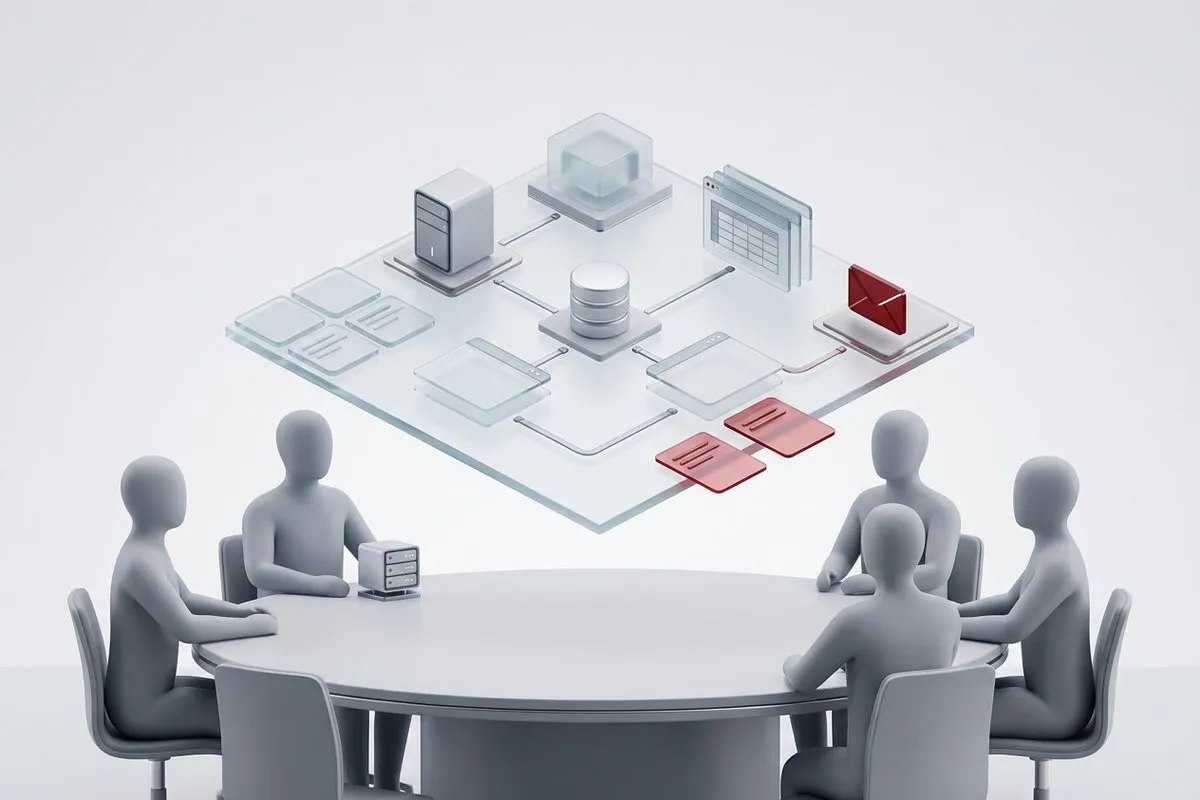
Initial AI consulting: infrastructure and people
Infrastructure study
What data the company has, where it is, and what state it is in; which software is used, how the programs connect to each other, and what each one allows.
Interviews with each area
Sessions with the different areas of the company to understand the real needs, the points of resistance, and the automation opportunities that the current software does not cover: tasks kept in parallel spreadsheets, emails forwarded by hand, or improvements nobody has asked for because they were considered impossible.
Coordination with the company's IT team
If the company has an infrastructure or IT provider, they take part in the work. Our role is not to replace them: whatever we develop has to be compatible with the current infrastructure and with whoever maintains it.
What the initial AI consulting delivers
Three documents to make decisions based on data.
Assessment report
A map of the inefficiencies we find, the areas for improvement, and specific proposals for implementation and development. It names specific processes and software.
Prioritized roadmap
The actions, ordered and agreed with the company, with an approximate estimate of what each one costs in money and time.
The first action, in detail
Whatever is chosen to be done first is detailed separately: scope, exact cost, and execution schedule, so the decision can be made with all the information.
We classify the blocks into phases and by complexity
The consulting proposes actions of different scope. Classifying them helps to spread them over time and to avoid starting with the largest one: the usual approach is to carry out one or two small ones, check that the result is as expected, and move on to the next level.
Low complexity
Automation of administrative tasks or AI agents for basic queries. The simplest ones are up and running in one week each and are a good first step.
Medium complexity
AI agents connected to internal databases, or small custom-built automations and tools.
High complexity
Larger custom developments, integration across several systems, and AI agents that make decisions within a process.
Implementing AI with a short-, medium-, and long-term plan
We propose an iterative system, repeated at regular intervals, to bring AI into the company in a controlled way and with measurable results.
Actions spread over time
The roadmap places low-complexity actions in the short term and leaves the larger ones for the medium and long term, once the first ones are working.
Consulting and implementation, interleaved
Consulting sessions alternate with the implementation of the agreed actions: one action is implemented, its result is reviewed in the next session, and the next step is decided.
Results from the first action
The company sees results without waiting for the end of a long project, and each team brings AI into its work gradually.
A plan that adjusts to what is learned
The plan is reviewed with the indicators from each action: what works is kept, and what does not is rethought or dropped.
Measuring the process before automating it
We draw on business intelligence tools and on our experience implementing solutions in companies across different sectors.
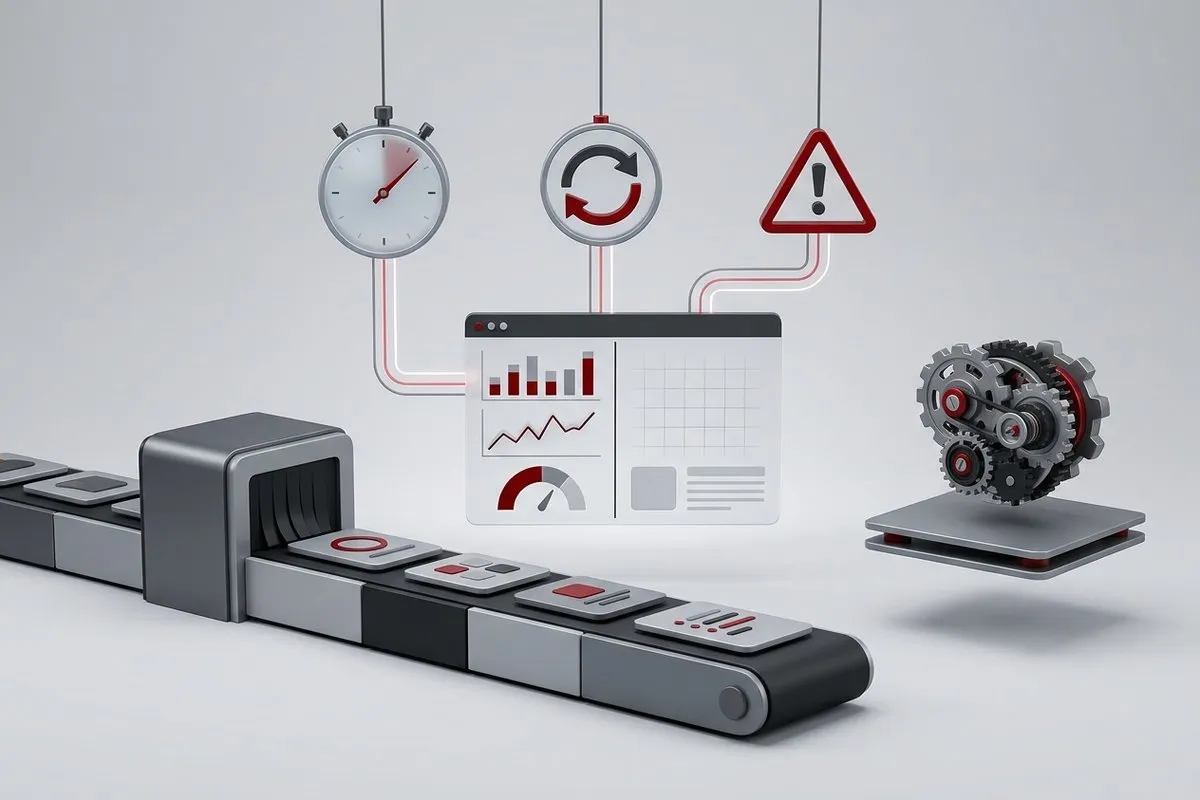
Without measurement, the result cannot be evaluated
Before automating a process, it is worth having a tool that measures how it works today: how long it takes, how often it is repeated, how many errors it produces. Without that measurement, there is no way to know afterward what has really improved, or by how much.
Indicators that have to be created
Those indicators often do not exist, and creating them is one of the first actions we propose. If the data is already unified, the dashboard is a small job.
Frequently asked questions about AI consulting
Does the consulting commit you to contracting the development afterward?
How long does the initial consulting take?
Can I start with 4 sessions and add more later if needed?
Who owns what is developed?
How is compliance with the EU AI Act handled?
Do you need to be a large company for AI consulting?
Is the AI consulting done in person?
In which of your company's processes does AI add value?
Tell us what your company does and which processes would be worth improving. In a first conversation, which is free, we can determine the most suitable type of consulting.