

We develop intranets, software as a service (SaaS) and any kind of tool that can be accessed online.
Custom Web Applications
We design and develop tailored tools and platforms for businesses, adapted to specific objectives to optimize processes and provide advanced functionalities.
What are custom web applications?
Cloud-based platforms for services and process automation.
We develop all kinds of cloud-based tools
A custom web application is a program that is used from the browser, with no installation, and that is built for the processes of a specific company. It is one of the forms of custom software.
Unlike WordPress-based websites or high-performance websites, which display information, a web application works with each company's data: users with permissions, forms, calculations, documents and integrations with other tools.
Internal tools for businesses
Applications designed to meet specific business objectives, such as process optimization, project management, inventory control, and more. When a fixed rule is not enough to solve something, we embed AI inside the application itself.
Interactive portals and customized platforms
We develop applications with intuitive interfaces for managing public or private services, including client portals, document management platforms, and collaboration tools.
SaaS services
Customer-oriented platforms that offer online services with advanced functionalities, which may require payments or subscriptions and have a professional aesthetic.
Who needs custom web applications?
Custom web applications are ideal for businesses, startups, and institutions that require digital solutions to automate processes, manage complex data, or offer cloud-based services. They are particularly useful for internal or public projects with unique requirements that cannot be met with standard tools.
Web, PWA or app
Custom web application or mobile app?
When starting a new project, it is common to think of an app first. However, for management tools, B2B platforms or SaaS services, a web application usually solves the same problem with a single development for all devices, without going through the app stores.
When a web application is the right choice
- A single development for desktop, tablet and mobile, instead of programming for iOS and Android separately.
- Data management tools: bookings, customers (CRM), processes (ERP) or dashboards.
- Public pages that need to appear on Google to attract users.
- Projects that do not depend on specific phone sensors.
Progressive Web Apps (PWA)
A PWA is a web application that is installed from the browser itself: it adds an icon to the home screen, opens in full screen, can send notifications and, if prepared for it, works offline or with poor coverage. The experience is close to that of an app, with the cost and agility of a web application.
When a mobile app is the right choice
When the application needs Bluetooth, NFC, biometric sensors or to run in the background, or must be published on the App Store and Google Play. In that case, we develop hybrid apps for iOS and Android, managed from a web application.
Comparison summary
Access
Web application (and PWA): Immediate from the browser, with no downloads.
Mobile app: Found and downloaded from the App Store or Google Play.
Presence on Google
Web application (and PWA): Public pages can be indexed; private-access pages cannot.
Mobile app: The app's content does not appear on Google; only its store listing does.
Development cost
Web application (and PWA): A single development adapted to all screens.
Mobile app: Higher: an app for iOS and Android and, usually, a web application to manage it.
Updates
Web application (and PWA): Immediate: users always have the latest version.
Mobile app: They go through Apple and Google review, and arrive when users update the app.
Phone hardware
Web application (and PWA): Camera, location and notifications (on iPhone, only if installed as a PWA). Bluetooth and NFC are limited.
Mobile app: Full access: Bluetooth, NFC and biometric sensors.
| Requirement | Web application (and PWA) | Mobile app |
|---|---|---|
| Access | Immediate from the browser, with no downloads. | Found and downloaded from the App Store or Google Play. |
| Presence on Google | Public pages can be indexed; private-access pages cannot. | The app's content does not appear on Google; only its store listing does. |
| Development cost | A single development adapted to all screens. | Higher: an app for iOS and Android and, usually, a web application to manage it. |
| Updates | Immediate: users always have the latest version. | They go through Apple and Google review, and arrive when users update the app. |
| Phone hardware | Camera, location and notifications (on iPhone, only if installed as a PWA). Bluetooth and NFC are limited. | Full access: Bluetooth, NFC and biometric sensors. |
Since 2004 we have developed all kinds of web applications
Examples of Custom Web Applications
These are some of the most representative, without client names for confidentiality reasons.
Processes and Planning
- Administrative services firms: organization of employees’ tasks and planning, with clients and their requests grouped together. Each procedure has a work template: when a request comes in, all its pending processes are created and the team keeps track of where each one stands.
- Public sector: management of activities, with their budgets and planning.
Center Management
- Medical centers: doctor availability, appointments, patient follow-up and billing.
- Driving schools: management of students, cars and practical lessons, with automatic SMS reminders.
Automatic Document Generation
- Technical data sheets: for the industrial sector, generated from the client's own database or one designed by us, for example with Pimcore.
- Delivery notes: integrated into the management platform of garden centers.
- Labels: for textile retail companies, generated from their product data.
Training and Accreditation
- Training management: materials, trainers’ streaming sessions, questionnaires, student follow-up and certificate issuance.
- Accreditation platforms: a landing page and a questionnaire from which a dynamic report, with charts, and the corresponding certificate are generated automatically.
SaaS Platforms
- Smart data validation: users upload a value or an Excel file, or connect their system via API, and the platform indicates whether the data of each type is correct.
- Football clubs: management of tactics, training sessions and club follow-up.
- Website builder: creation of websites, with a private area to manage their content.
Technical Calculation for Industry
- Industrial components: calculation of their performance with advanced physics and mathematics models.
- Pharmaceutical industry: online calculators, with private access for their users.
Marketing and Search Visibility
- Marketing campaigns: tools to monitor campaigns and analyze their results.
- SEO and GEO: advanced tools to measure and monitor a website’s presence on Google and in AI assistants.
Connected Devices (IoT)
- Wristbands: cloud platforms that receive and manage the information from wristbands, connected to a mobile app.
- Screens: management of connected screens from the web application.
This list is only a small sample: we can develop whatever your company needs, even if it does not resemble any of the solutions listed.
Advantages of custom web applications and cloud-based tools
They offer unique benefits compared to standard solutions.
Flexibility
- Complete adaptation: Functionalities, design, and architecture are developed according to the specific requirements of the project.
- Advanced customization: Ability to integrate exclusive functionalities not found in generic tools.
- Constant evolution: Systems can be adjusted to new needs or challenges that arise over time.
Easy access and online usability
- Global accessibility: Users can access it from anywhere at any time.
- Multi-device compatibility: Works on desktops, tablets, and smartphones without the need for specific versions.
- Cross-platform support: Runs on any operating system with a compatible browser.
- No installation: They take up no space on the device and require less hardware, because processing is done on the server.
Automation and efficiency
- Optimized management: Automates repetitive tasks.
- Increased productivity: Reduces the time required to complete key processes.
- Error elimination: Automating critical processes minimizes risks associated with manual errors.
Scalability and growth adaptation
- New functionalities available on demand.
- Ability to manage large volumes of data without compromising performance.
- Future-proof: Easily integrates with emerging technologies.
Ease of maintenance and updates
- Instant updates without requiring downloads.
- Remote maintenance: Adjustments and improvements without significant interruptions.
- Reduced costs thanks to centralized management.
User-focused design
- Ease of use: Intuitive designs for a better user experience.
- Visual adaptability to meet the needs of the target audience.
Full control and ownership
- Code ownership: Full autonomy over modifications or transfers.
- Independence from third-party providers.
- Custom security adapted to specific compliance requirements.
Optimized for collaborative projects and SaaS
- Real-time teamwork capabilities.
- Subscription-based services: Manage users and services efficiently.
A design tailored for each project
At Gilsys, we understand that every web application has specific objectives, and its design should reflect them. That is why our development team adapts user interfaces (UI) according to the type of project:
Functional interfaces
Ideal for internal applications where simplicity and efficiency are the main priorities.
Attractive interfaces
Necessary for SaaS projects or tools designed for the end-user, where visual appearance and accessibility play a key role.
Architecture
A monolithic application, or an API with a separate frontend
It is a technical decision that depends on the type of project: the approach changes depending on whether it is a SaaS platform, an intranet or a tool for occasional use.
Monolithic: everything in one piece
With no separate API or presentation layer, development is lighter because everything is unified, and the result is just as valid. In return, scaling performance or infrastructure is harder, connecting external tools costs more, changing the look means touching code, and automated tests are harder to implement.
Separate API and frontend
The logic lives in an API and the interface is developed separately, usually with React and Mantine. Each part scales on its own, other tools connect to the same API, the look changes without touching the logic, and automated tests can be written. It is where development is heading, and what we recommend for new projects.
We try to keep errors to a minimum with automated tests
Quality control of web applications
Unit tests
In projects that separate the API and the frontend, we write unit tests in every case. Each test checks a specific part of the application and warns that something has stopped working before a user notices.
Tests written with AI agents
Specialized AI agents write the tests under our review, which makes it possible to cover more cases than writing them by hand. It is where results have improved the most since we brought AI into development.
With every new version
Tests run automatically with every new version of the application, as part of the continuous integration process used to release it.
We take security very seriously
What happens to personal data in a custom web application?
Encrypted data in tables
Table data that requires it is encrypted with cryptographic systems.
Database encrypted with TDE
In addition, the entire database is encrypted with TDE (Transparent Data Encryption): its files cannot be read without the key.
Access log
A record is kept of who accesses the application and when.
Protected backups
Backups are password-protected, and the drive where they are stored is encrypted.
Secure connections
Applications always run over secure protocols (HTTPS).
Internal audit before release
Before each deployment, we carry out a second internal audit, assisted by AI.
We are not a cybersecurity company or legal advisers. When the project requires it, we always recommend working with a company that specializes in data protection or cybersecurity to get a second review.
Why Choose Gilsys for Custom Web Application Development?
Experienced Technical Profiles
We work with a wide range of languages and frameworks. In many companies, it is common for a programmer with three to five years of experience to move into management and stop developing technically. At Gilsys, we have several technical profiles with long careers, which brings greater maturity to our solutions.
Interface Design Aligned with Each Company’s Identity
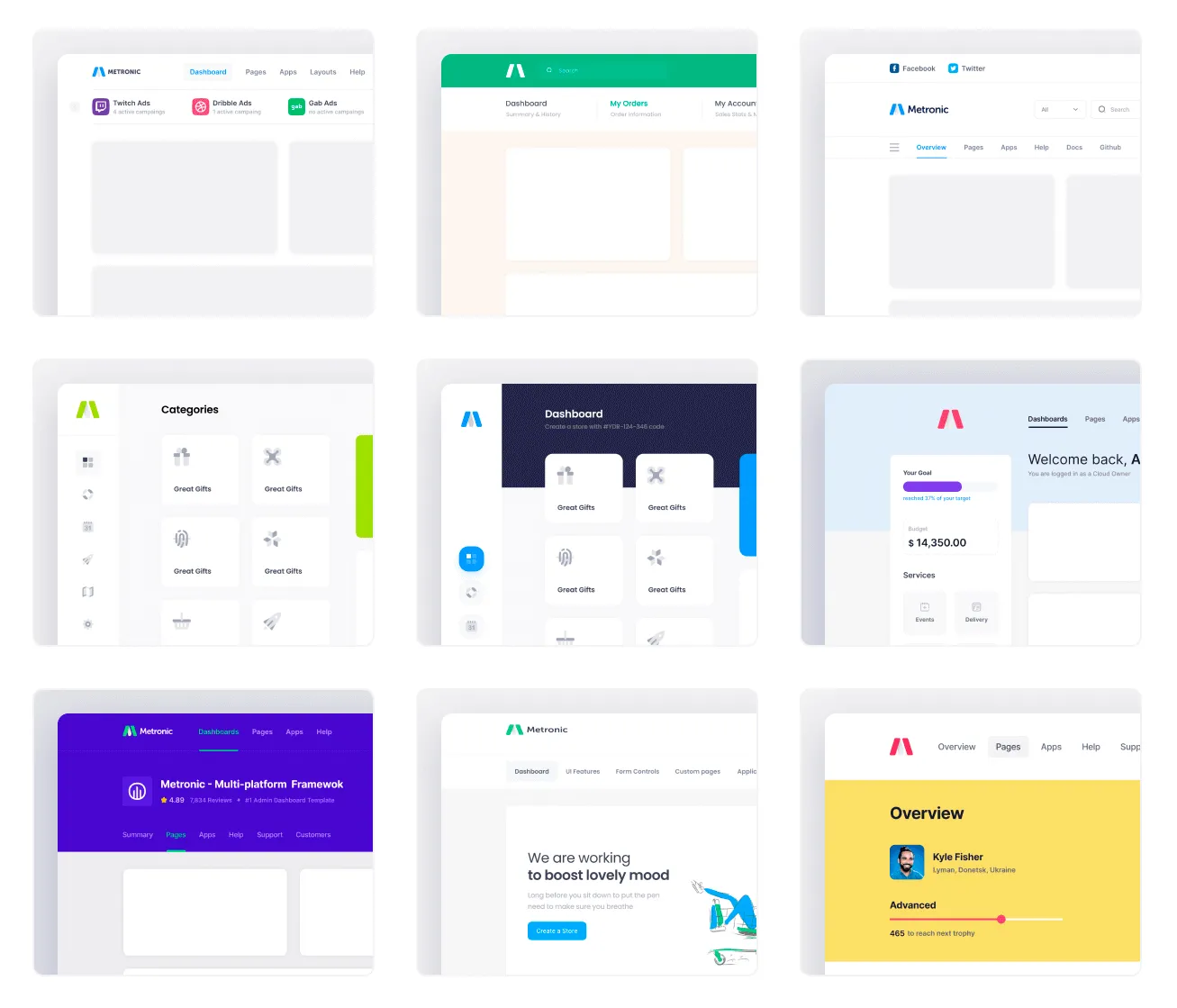
We also take care of the UI/UX design: we select and adapt components from Mantine, Metronic or another framework, so that the application follows your company's visual identity and meets the requirements of the project.
AI with Judgment
We bring AI into development with judgment: we review every proposal and do not accept it without validating it. Technical decisions are made by us, not by AI.
Adaptation Across Various Industries
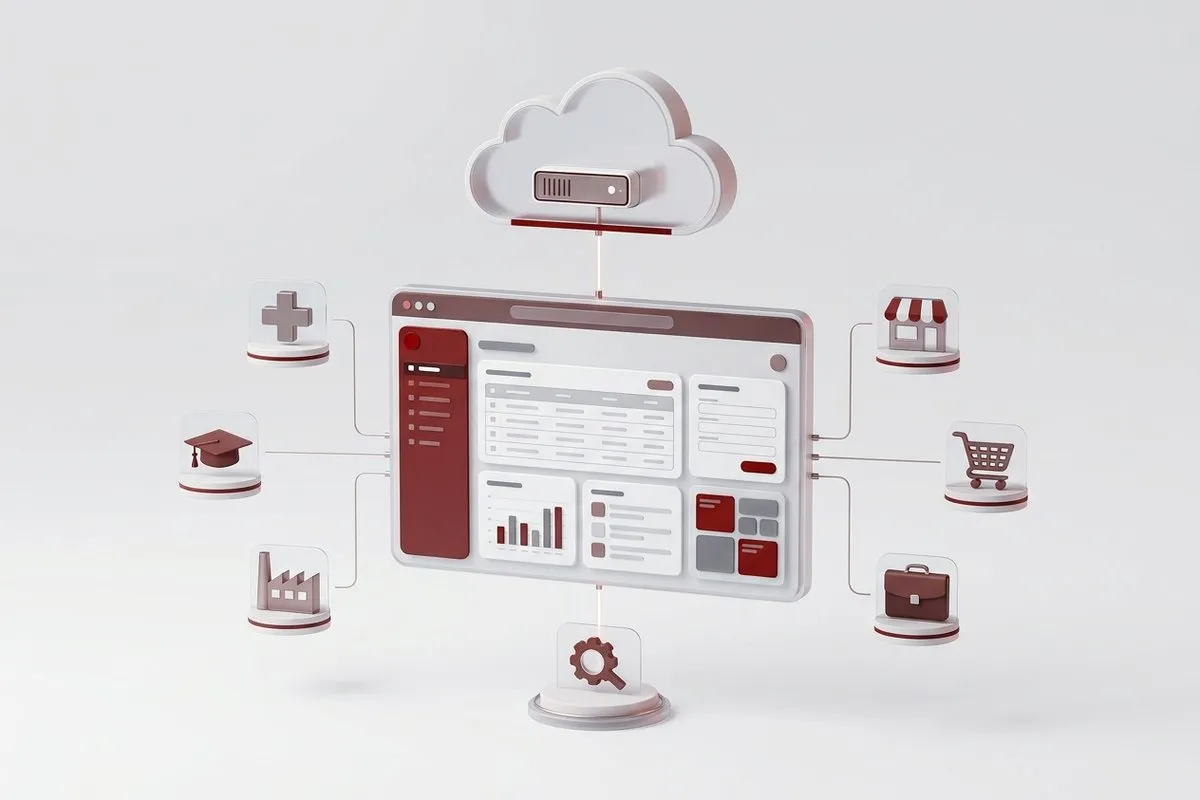
We have experience in projects across diverse sectors, including the public sector, healthcare, education, manufacturing, retail, and business services.
Technical Support and Future-Proofing
We offer corrective and evolutionary maintenance to ensure that your applications keep meeting changing needs.
Frequently asked questions about custom web applications
Which is more affordable: a custom web application or a hybrid or native app?
Who owns the code and the application?
What costs are there once the project has been delivered?
Which web application does your company need?
We will analyze whether a web application, a PWA or an app suits you best and prepare a tailored quote.