

We plan from the MVP to the final version
Functional analysis and project planning in phases with an MVP
Requirements still to be defined, new products, SaaS products, and large-scale projects: we prioritize what adds the most value and plan a base MVP (minimum viable product), along with the timeline and cost of each phase.
We carry out the functional analysis and bring new perspectives
Projects planned in phases
In most medium-sized or large projects, we recommend dividing the development into stages rather than planning all of it at once.
An idea not yet defined
The goal is clear, but not how the product should work or how to approach it. Before the development is quoted, a discovery phase defines it.
Many features and a limited budget
It is common to want to include everything from the start. The first phase focuses the budget on the priorities, and less urgent features, however attractive, are left for later phases.
A new product to validate
A startup or a project with limited resources that needs to check whether the idea works before investing more. The aim is to find the most economical way to develop an MVP that serves as the base from which the idea can evolve.
A SaaS product
A platform that other companies or users pay a subscription for, with recurring billing. The first phase serves to check that the product has customers willing to pay for it.
A tight delivery deadline
When the deadline is what matters most, regardless of cost, the first phase includes only the priorities, and the remaining features are added in the following phases.
A large-scale project
Too large to quote in full at once. It is divided into phases, each with its own scope and price, and each phase is decided with what was learned in the previous one.
How we plan a project in phases
We analyze the ideas, classify them, and prepare the plan.
Agreed requirements
What is to be developed and what happens today while it remains unsolved: how much time it costs, how many errors it causes, or how much revenue is lost. The requirements are agreed with the company before the solution is defined.
Priorities
Which features are essential and which can wait, based on their cost, complexity, financial return, and the company's priorities.
Find out how they are prioritized.
Discovery, when needed
If the idea is not yet defined, there are many features to assess, or the project includes innovative concepts that should be researched, we carry out a discovery phase, which usually lasts between two and six weeks.
Defining the first phase
Its features, timeline, and cost, with what is included and what is left out set down in writing. This is the moment that most influences the outcome of the project. What the first phase includes.
An indicative plan for the remaining phases
The following phases are planned provisionally, to be detailed and adjusted with what is learned in each phase. How they are adjusted.
How features are prioritized
The first phase focuses the budget on what matters most for the product to work. Attractive but lower-priority features are added in later phases, and what is developed at the start is not discarded: it is the foundation for what comes next.
Cost
How much each feature costs to develop and maintain, relative to the value it adds.
Complexity
A complex feature can wait if a simpler one solves a good part of the problem.
Financial return
Priority goes to what generates revenue or reduces costs soonest: in a SaaS product, for example, the feature the customer pays for.
Company priorities
Some features are brought forward for internal reasons: a commercial deadline, a commitment to a client, or a process that cannot be delayed.
Dependencies between features
Some require another one to exist first. They are ordered so that each phase works on its own.
Impact
Prioritizing based on user satisfaction and retention.
Discovery: defining the project before developing it
In a new project, the most costly thing is to find out halfway through development that an approach was not the right one. The discovery anticipates this: before the product is developed, its functionality is defined, the most innovative or uncertain concepts are investigated, and the scope of the first phase is decided.
Two to six weeks, depending on the size of the project
It is not always necessary: it depends on each project. If the idea is already defined, the project moves straight on to planning the first phase. In some cases, the engagement covers only the discovery.
What is delivered
The functional definition, the architecture and technical decisions, tests of the most uncertain aspects (for example, an integration or an AI model), and the quote for the first phase. When it helps to understand the project, also a quick AI-generated mockup, which is not functional.
A fixed price, with a result that belongs to the company
It requires considerable work, often in sessions with the client's team, and is billed at a fixed price. The result has value in itself: the development can be done with us or with another company. If it continues with us, we build on the knowledge acquired, which allows us to price it more tightly.
Research and innovation, within our field
Researching and evaluating new technologies is part of our work, and 20+ years of experience allows us to take on innovative projects, always within our field of expertise. If we consider that we cannot take on a project reliably, we say so and recommend a specialized company.
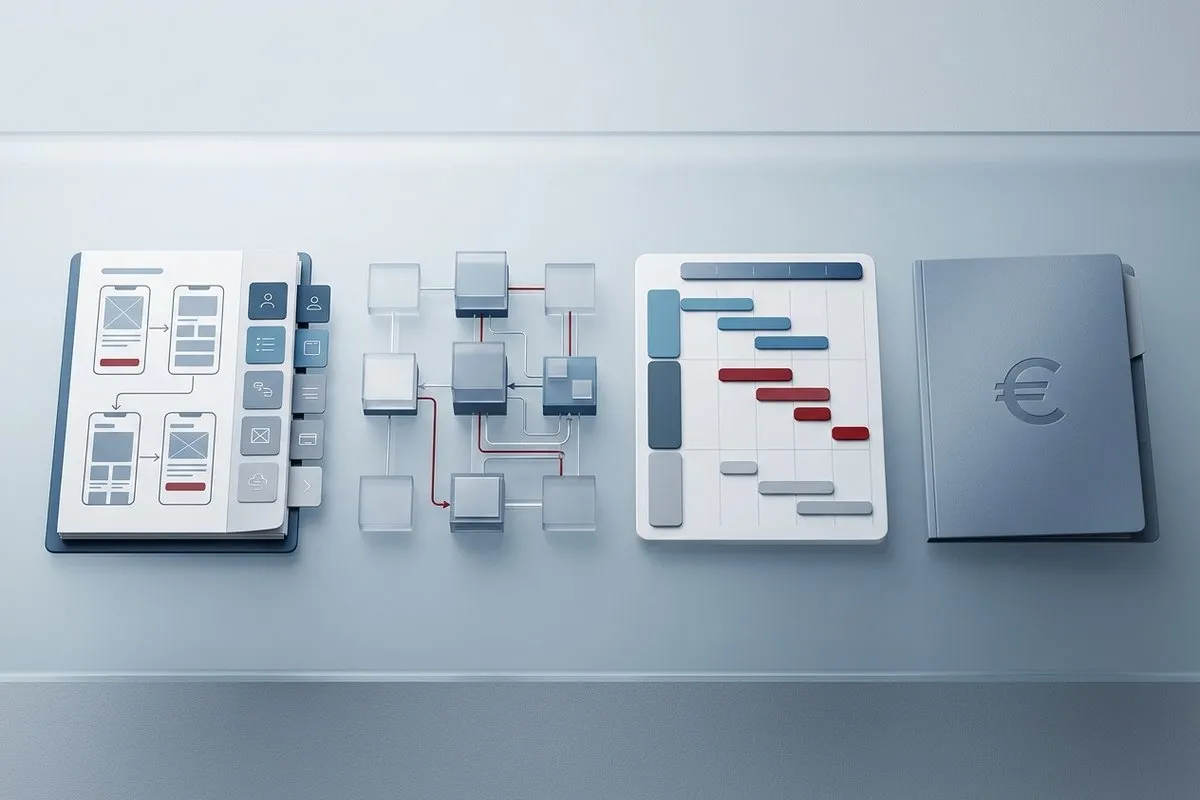
What an MVP is: the smallest part of the system, already in use
An MVP (minimum viable product) is the smallest part of the system that already solves a real problem and that someone uses in their work. It is deployed at the end of the first phase and stays in production.
The difference matters: in a demo, a mockup looks right and provides little information, whereas a system in use shows which parts of the process fail, which screens go unused, and which data is missing.
In addition, quoting a complete project from the start means fixing the scope and the price when the least is known about it. What is learned during development can no longer be incorporated without renegotiating the project.
It is not a mockup
A mockup is presented in a meeting and discarded. An MVP is deployed and stays in use.
It is not a prototype
The code from the first phase is still in use in the last one. A prototype, like those built with vibe coding, serves to validate an idea and is then discarded.
It is not a cut-down version of the project
It is not the complete project left unfinished: it is a complete part that works on its own and is useful without the following phases.
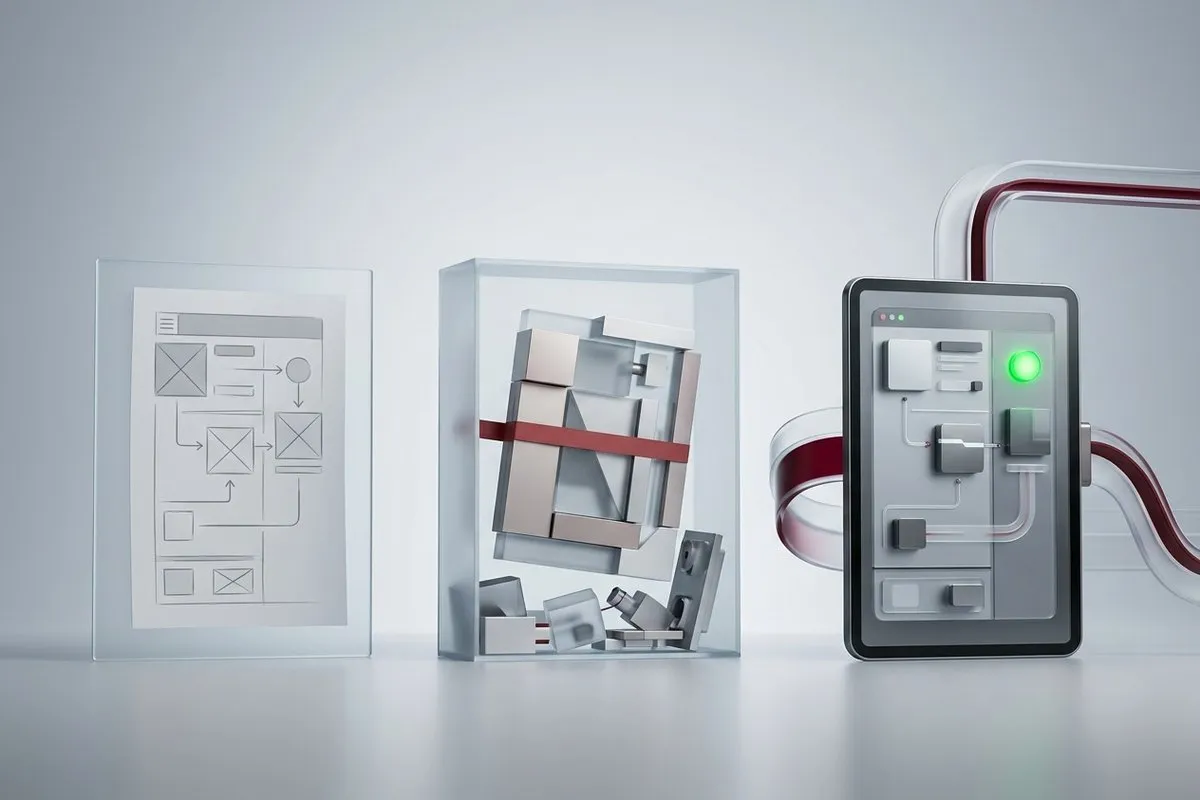
What the first phase of a project includes
The features that define the product and the technical foundation on which the following phases are built. The reference duration is three to four months, six at most; a simple project takes less time.
The core features
Those that define the project, the service, or the product. Without them, the first phase cannot show whether the idea works.
The data model design
How the information in the system is structured and related. It is an essential requirement of the first phase: changing it later, with data and features built on top of it, is costly.
Data migration and organization
If there is existing data, the first phase can include migrating or reorganizing it, so that the new system has it from the start. This is data governance work.
User access, roles, and permissions
The login system and the roles and permissions of each type of user. They are defined from the start because they affect every screen and all the data.
Infrastructure and technologies
Where the system will run, how it will be deployed, and which technologies it will be developed with, chosen for the complete product and not just for the first phase.
Preparation for multiple languages
The groundwork for adding translations, even if the first version is published in a single language. Adding it later means reviewing every text in the system.
Basic security review
No project goes into production without a minimum level of security. For a full audit, we recommend a specialized company.
A part that works on its own
A phase that needs two others to be useful is not a phase. What is developed must be able to go into production and work without the following phases.
Only the necessary features
Developing features that may never be used is the easiest expense to avoid. The technical foundation is prepared to grow, and features are developed when they are needed.
A hypothetical example
A dating app planned in four phases
Each feature is assigned to a phase according to its cost and the value it adds. The first phase only checks that the idea attracts users; the most expensive parts come once the product has proven it.
Sign-up and profile
Phase 1: MVP (validation): Sign-up with email, a photo, and a short description
Phase 2: interaction: Several photos, an extended bio, and main interests
Phase 3: monetization: Profile verification with a selfie analyzed by AI, to prevent fake profiles
Phase 4: scaling and AI: Compatibility test and reputation badges
Browsing profiles
Phase 1: MVP (validation): Profiles sorted by proximity, at city level
Phase 2: interaction: Basic filters: age and maximum distance
Phase 3: monetization: Advanced filters: lifestyle, tastes, and intentions
Phase 4: scaling and AI: Behavior-based recommendations, with AI
Connection
Phase 1: MVP (validation): "Like" or "Don't like"; when two users like each other, the match is shown
Phase 2: interaction: Text chat between users who have matched
Phase 3: monetization: Highlighted messages before matching
Phase 4: scaling and AI: Automatic suggestions to start the conversation, and voice and video calls
Notifications
Phase 1: MVP (validation): On-screen notice when opening the app
Phase 2: interaction: Email or mobile notifications when there is a match or a message
Phase 3: monetization: Priority activity alerts
Phase 4: scaling and AI: Weekly compatibility summary
Business model
Phase 1: MVP (validation): Free, to measure usage and user acquisition
Phase 2: interaction: Daily "Like" limit to control volume
Phase 3: monetization: Subscription, with a payment gateway, to see who has liked you
Phase 4: scaling and AI: Micropayments: more profile visibility or gifts
| Feature | Phase 1: MVP (validation) | Phase 2: interaction | Phase 3: monetization | Phase 4: scaling and AI |
|---|---|---|---|---|
| Sign-up and profile | Sign-up with email, a photo, and a short description | Several photos, an extended bio, and main interests | Profile verification with a selfie analyzed by AI, to prevent fake profiles | Compatibility test and reputation badges |
| Browsing profiles | Profiles sorted by proximity, at city level | Basic filters: age and maximum distance | Advanced filters: lifestyle, tastes, and intentions | Behavior-based recommendations, with AI |
| Connection | "Like" or "Don't like"; when two users like each other, the match is shown | Text chat between users who have matched | Highlighted messages before matching | Automatic suggestions to start the conversation, and voice and video calls |
| Notifications | On-screen notice when opening the app | Email or mobile notifications when there is a match or a message | Priority activity alerts | Weekly compatibility summary |
| Business model | Free, to measure usage and user acquisition | Daily "Like" limit to control volume | Subscription, with a payment gateway, to see who has liked you | Micropayments: more profile visibility or gifts |
Why do we recommend dividing the project?
Lower initial investment
The first phase does not include a real-time chat, which requires more infrastructure, message moderation, and spam control. It is limited to checking whether the concept attracts users and generates matches.
Validation without taking on the full cost
If users do not sign up or do not get past the match screen, the problem lies in the value proposition or in user acquisition, not in the chat or the payment system, which have not been developed yet.
Investment at the pace of the product
Recurring billing through gateways such as Stripe or Redsys and the recommendation algorithm, in phases 3 and 4, are developed once there are enough active users to justify them.
Reassessing requirements and priorities
What happens once the consulting work is done?
Evaluating and measuring the latest phase
The effectiveness of the features implemented is determined, and data is collected on usage and user satisfaction.
Reviewing what was planned for the next phase
The features of the next phase are reviewed one by one with the information available. Some are kept, others change, and others are removed; what is removed has not been paid for, because it had not yet been quoted.
Quoting new needs
Use reveals new needs: an unforeseen case, a report that is needed, or an unnecessary step. What is not urgent is added to the quote for the next phase.
Deciding on the next phase
Continue, change priorities, or stop the project. The decision is made with the system running and with what has been learned, not with the initial specification.
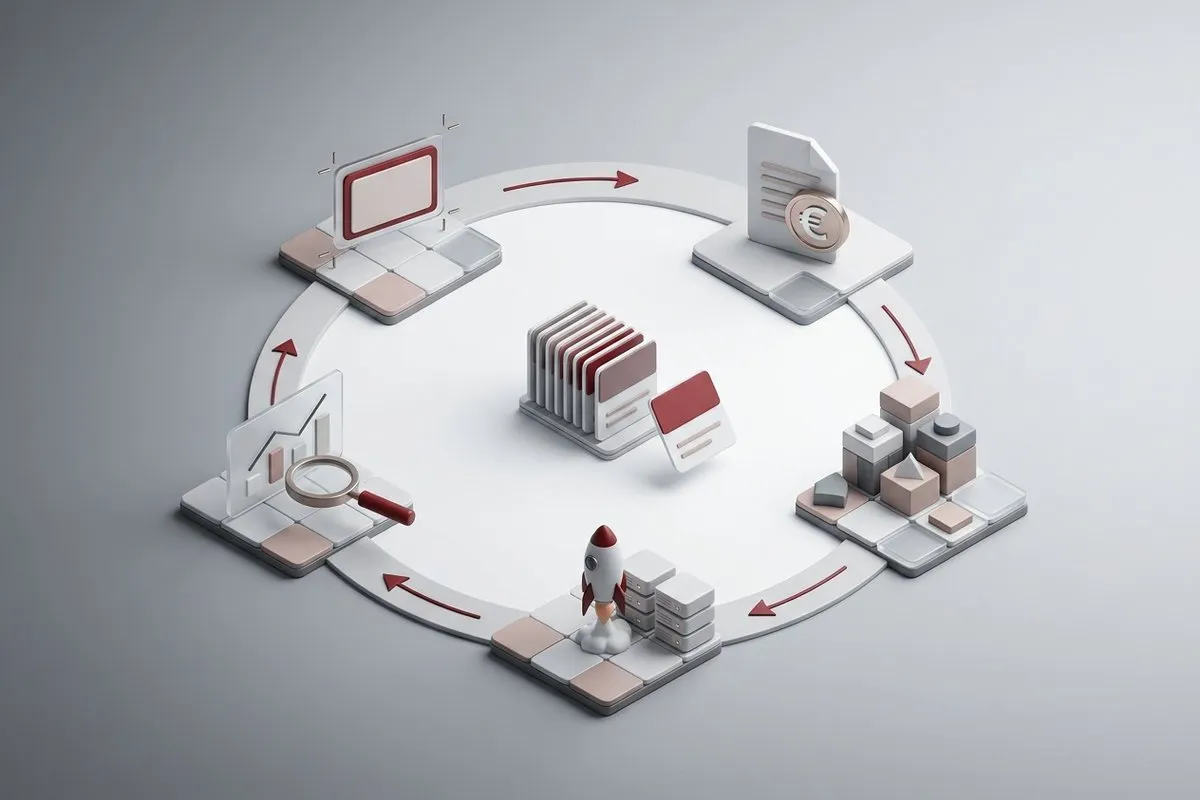
What is quoted at each stage, and what is fixed
Some parts depend on a third-party system, on data that does not exist yet, or on a decision made by others. This is stated in the quote, with the cost of each alternative, to try to avoid surprises and additional costs.
Indicative quote, free of charge
A cost range, with no obligation, based on a first conversation. The quote for a small project is also free.
In-depth study, billed
When many features have to be analyzed, the architecture proposed, and the technical details specified, the study requires considerable work and is billed: this is the discovery.
Fixed before each phase starts
The functional scope of the phase, written and reviewed; its price; the deployment date; and what is left out, in writing and in the same detail as what is included. If the requirements change during the phase, the company's priority prevails: if something has to be cut or extended, the cost is reviewed. Good prior planning of the features keeps these changes to a minimum.
What is not fixed, and why
The scope of the complete project, because it will change as it progresses; the total price, for the same reason; and the details of later phases until the first one has been deployed.
When phased development is not worthwhile
It is not a universal method. In four cases, it is better to quote the complete project and say so from the start.
The scope is set by a third party
A tender document, a regulation, or a contract that requires the complete system by a specific date. In that case, the project must be delivered complete.
The system is of no use if incomplete
Some integrations only work when complete. If they cannot be divided into parts that work on their own, a first phase cannot be defined.
The old system shuts down on a fixed date
While the old system is still running, the two can coexist and development can proceed in phases. If the shutdown date is fixed, it also constrains the scope.
The project is too small to divide
If the project is small, phased planning brings no advantages and only adds complexity. In that case, all the features are quoted at the outset.
Frequently asked questions about MVPs and phased development
How much does a first phase cost?
What happens if we stop after the first phase?
Who owns the code?
How long does the whole project take?
Is phased development only for startups?
How much time and effort does the project require from my team?
Which part of the project should be solved first?
Tell us your idea or which process takes up the most time today. In a free first conversation, we determine whether a discovery phase is needed or whether a first phase can be defined directly.